
Slots, Live Tables and Game Filters Compared
Sono presenti volte giochi, rso gratifica e le stesse promozioni attive verso la testimonianza cervello elettronico desktop
November 17, 2026Questi operatori si distinguono verso la lei fiducia, l’eccellente favore compratori ancora un’esperienza di artificio completa
November 17, 2026

Choosing a casino lobby is easier when the catalogue is treated as a set of different experiences rather than one long list of titles. The casino spinsy platform is described as offering a broad mix of slots, live dealer tables, jackpots, crash games, game shows and smaller instant titles. For Canadian adults, the practical question is not simply how many games appear, but how to narrow the selection, understand the formats and decide what deserves closer attention before playing.
Start with the lobby instead of the title list
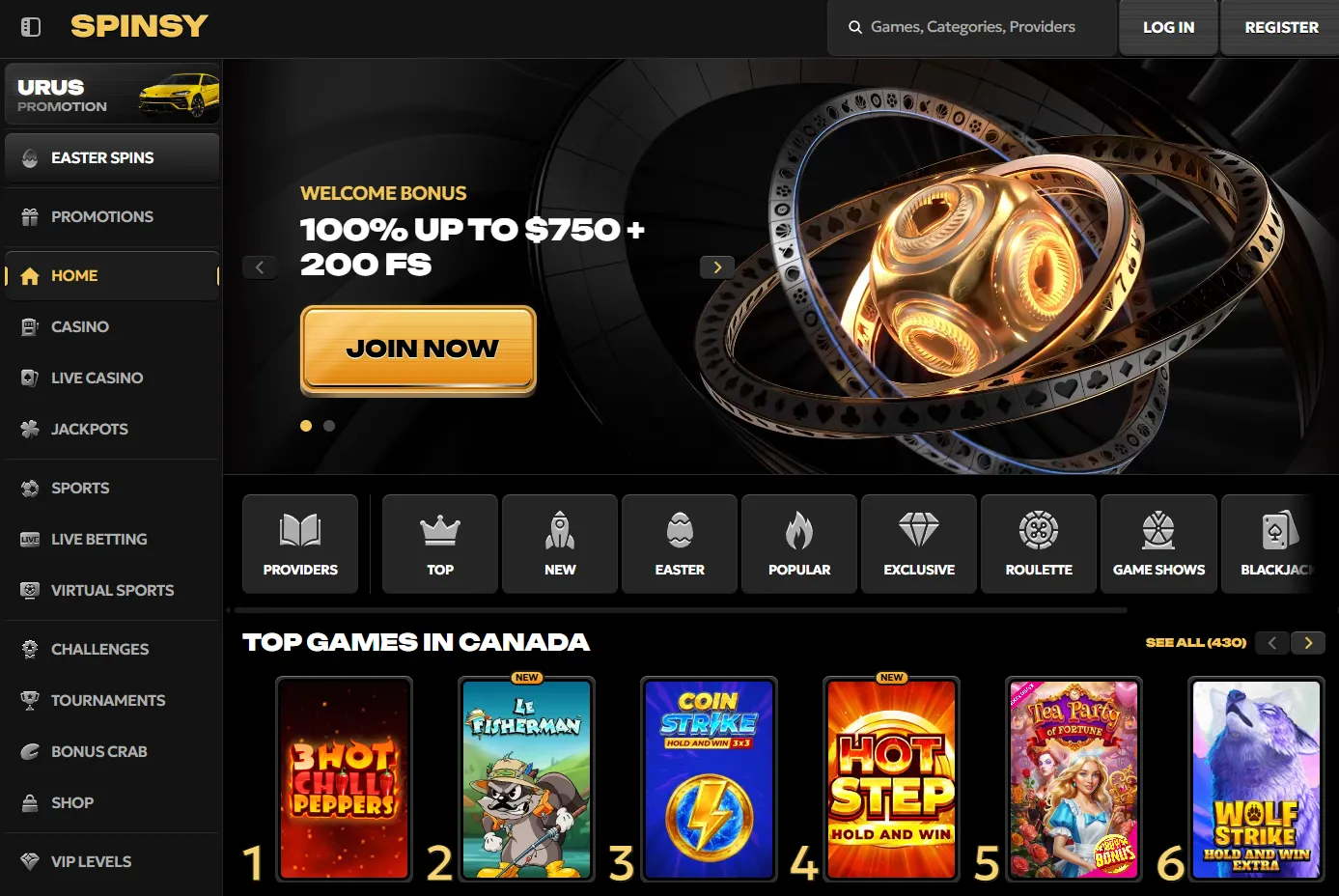
A large catalogue can become difficult to use when every game is displayed together. The most efficient first step is to identify the type of session you want: traditional reels, live tables, a quick instant game or a more feature-heavy slot. Common lobby categories include new releases, popular games, slots, live casino, table games, jackpots, bonus-buy titles and game-show content. These labels are useful starting points, but they do not tell you whether a game is suitable for your budget or preferred pace.
Search is particularly helpful when you already know a title, studio or theme. Provider filters can narrow the results to familiar developers, while category filters reduce the need to scroll through unrelated formats. A player looking for a live blackjack table, for example, can avoid sorting through thousands of slots. Someone interested in jackpot games can move directly to that section rather than relying on a random recommendation.
Filters should be treated as navigation tools, not quality guarantees. A “popular” section may reflect general activity rather than a game’s value, and a “new” label says nothing about volatility, rules or suitability. Open the information panel for each title where available, read the displayed instructions and check whether the game is available for your location. Catalogue contents can change by jurisdiction, account and site version.
Which game type fits the session you have in mind?
Slots are usually the broadest part of the catalogue. They can include traditional fruit-machine designs, branded themes, expanding-reel mechanics, cascading symbols, bonus rounds and feature purchases. Examples associated with the platform include Gates of Olympus, Le Bandit, Wanted Dead or a Wild, Book of Ra Deluxe and Raptor. These titles may look very different, so compare the rules and paytable rather than choosing only by artwork.
Live casino provides a more structured alternative. Roulette, blackjack and baccarat use familiar table rules, while game-show formats add presenters, visual effects and extra decision points. Live games often suit players who prefer a hosted environment over automated reels, but they can require more time and attention. Table limits, available seats and specific rule variations may differ between rooms, so review the table information before committing funds.
Crash, instant and mini games are generally designed around shorter rounds, while jackpots and bonus-buy slots emphasize larger features or a faster route to special rounds. Neither format is automatically more suitable. A quick round can encourage rapid repeat play, and a bonus-buy option can consume a larger amount at once. Choose according to the pace you can comfortably control, not the excitement suggested by the graphics.
Compare providers when themes are not enough
Provider names offer another way to organize a crowded catalogue. The listed studios include Pragmatic Play, Hacksaw Gaming, Play’n GO, Yggdrasil, Betsoft, Novomatic, Playson, BGaming, Endorphina, Spinomenal, Quickspin, Thunderkick, Red Rake, Habanero, ELK Studios and Evoplay. Live content is also associated with studios such as Evolution, Pragmatic Play Live, BetGames, Vivo Gaming and LuckyStreak.
Using a provider filter can help you find a familiar visual style or game structure, but it should not be mistaken for a guarantee that every title from that studio plays alike. One developer may offer both simple low-feature reels and complex games with several bonus stages. Compare the individual paytable, symbols, bonus conditions and displayed statistical information for the exact title you are considering.
Short demonstrations can help with basic navigation, especially when a demo mode is available for a permitted slot. They can show how paylines, bonus icons or free-spin features operate. However, a brief demo does not establish a game’s long-term return, volatility or likelihood of triggering a feature. Treat it as a way to learn the interface, then decide whether the game belongs within your predetermined entertainment budget.
Use game information to separate style from risk
Visual presentation is often the first thing that attracts attention, but the practical details are usually in the paytable or information menu. Look for the winning combinations, special symbols, bonus triggers and any stated limits on features. For table games, check the rules, side bets and payout structure. A familiar name does not necessarily mean that the version follows the same rules as another version found elsewhere.
Volatility is another consideration when it is disclosed. Lower-volatility games may produce smaller outcomes more frequently, while higher-volatility games can involve longer periods without a notable result and less frequent larger outcomes. These descriptions are not predictions. They cannot tell you what will happen in the next session, and they should never be used to justify increasing a stake after losses.
Game speed matters as much as game type. Autoplay, rapid spins, repeated bonus purchases and fast live rounds can make a session move quickly. If the lobby offers account controls such as wager limits, time-outs or cool-off options, consider using them before play begins. Keep a separate record of time and spending, and remember that no slot, provider or table can turn gambling into dependable income.
Build a shortlist before opening several games
A shortlist prevents endless browsing and makes comparison more deliberate. Select two or three games from the category you want, then compare their format, pace, rules and feature structure. For slots, note whether the game uses cascading symbols, expanding wilds, free spins or bonus purchases. For live tables, compare the rule set, table limit and whether the interface includes side bets that you do not intend to use.
It can also help to divide games into “try later” and “not for me”. A title may be attractive but unsuitable because the rounds are too fast, the feature design is confusing or the table limit does not fit your plan. Removing unsuitable options is useful; a large catalogue does not require you to sample everything. If a title is unavailable, do not assume that a similarly named version has identical rules.
Before using any real funds, confirm the current Canadian-facing availability and the information shown for your account. The catalogue, providers and game access can vary by location and site version. Review the displayed terms, use only one account with accurate details and stop if the experience becomes difficult to control. A focused shortlist makes discovery more manageable without turning every new release into a reason to play.
Questions about choosing games
Can I try games before using real funds?
Demo play is described for at least part of the slot catalogue where the title and jurisdiction allow it. Availability may vary, so check the individual game screen. A demo can explain controls and features, but it cannot verify long-term returns, volatility or future results.
Are games from the same provider basically identical?
No. A provider may release games with different reels, paylines, bonus mechanics, volatility profiles and pacing. Use the provider filter to narrow discovery, then inspect the exact title’s paytable and rules. Familiar branding should not replace game-specific information.
Which category is best for a short session?
Instant or mini games may offer shorter rounds, while slots and live tables can encourage longer play. There is no universally best category. Decide how much time and money you are prepared to spend first, then choose a format with a pace you can comfortably control.
